
 EN
EN TR
TR AR
AR FR
FRTravel line
The machine runs along a prepared line — a canal, a hose feed or a buried main with hydrants — that supplies water the whole length of its pass.
A machine that travels the field and back instead of turning — covering up to 98% of a square, rectangular or irregular parcel and cutting labour cost by as much as half against flood or sprinkler irrigation.
It does not rotate. It runs the length of the field and back, which is the whole reason it reaches the corners a circle cannot.
The machine runs along a prepared line — a canal, a hose feed or a buried main with hydrants — that supplies water the whole length of its pass.
It travels the parcel applying a measured depth, the same across every metre of the width it covers.
At the end of the run it reverses and returns. There is no fixed centre, so there is no circle and no dry corner.
Up to 98% of a square, rectangular or irregular parcel is irrigated — the land you own, rather than a circle inscribed inside it.
Unlike a centre pivot, the linear does not rotate about a central point — it runs the length of the field and back. Coverage reaches up to 98% of the parcel and the irrigated area is maximised rather than inscribed. Against flood and sprinkler irrigation it cuts labour cost by up to half. On soils prone to it, applying a small amount of water at a time keeps the application balanced and stops surface run-off.
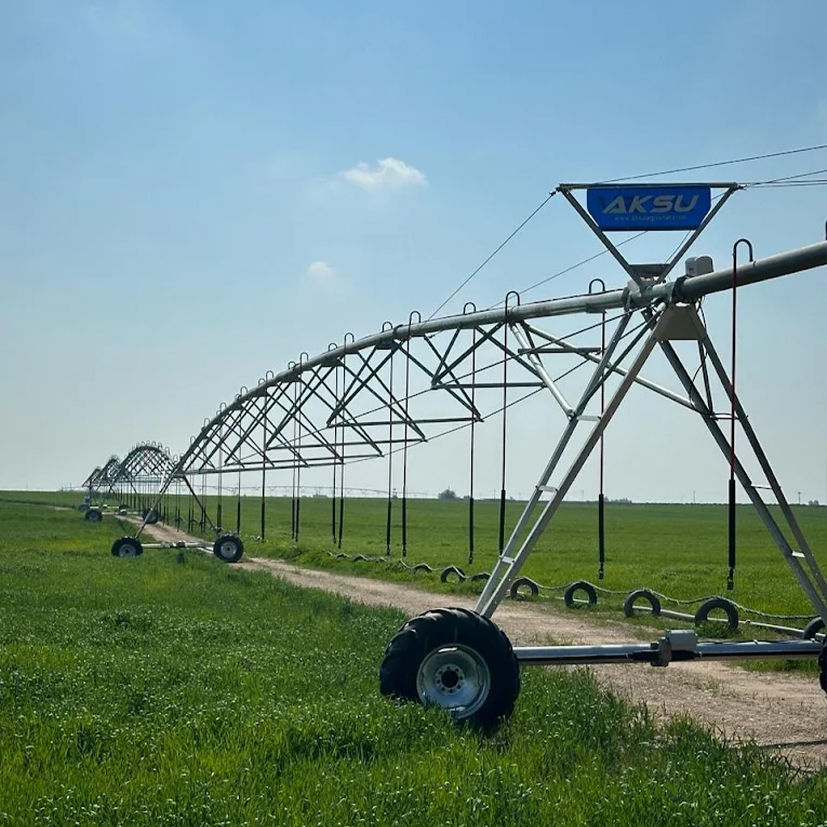
The saving in water comes from applying the same depth everywhere the machine passes, instead of the too-much-and-too-little a flood run leaves behind. Sprinkler size and spacing are charted for the soil so the application rate stays below its intake rate.
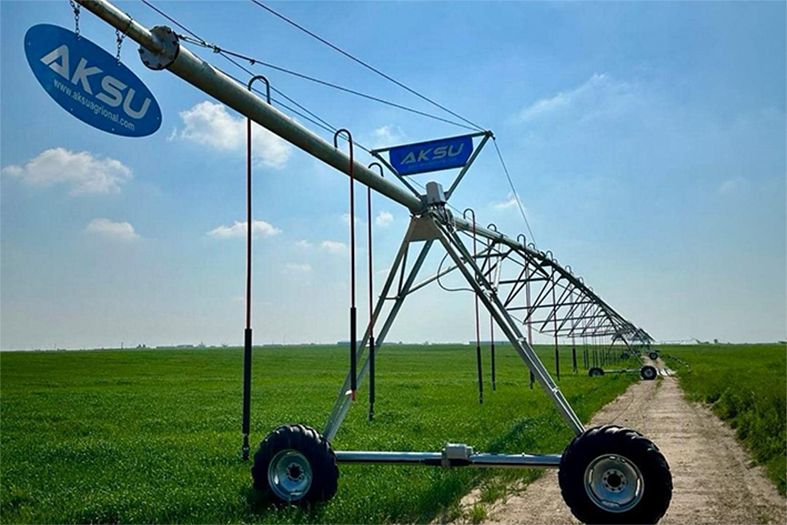
A linear is built from the same spans, drive and control as our centre pivots — so the spares and the service crew are the same machine to machine.
Gearmotor, wheel gearbox and tower box on every tower, keeping the line straight along the travel.
See the partHot-dip galvanized inside and out, drilled to your outlet spacing.
See the partNozzles charted for the soil so the application rate stays under its intake rate.
See the partDirection, depth and fault alarms; digital or standard, new build or retrofit.
See the partMulti-core span cable rated for outdoor irrigation duty.
See the partPressure held constant so the depth applied does not drift across the run.
See the partNo machine suits every parcel. This is where this one does and does not fit — the other two are compared below.
All three are built on the same galvanized spans, the same tower drive and the same control panel. The choice is about the shape of the land, not about the machine you are tied to afterwards.
A center pivot rotates about one fixed base and waters a circle. A linear machine travels the length of the field and back, so it covers up to 98% of a square, rectangular or irregular parcel instead of the circle inscribed in it.
Yes — lateral move, linear move and linear pivot all describe the same machine: one that travels in a straight line across the field rather than rotating.
From a supply that runs the length of the travel line — a canal, a hose feed or a buried main with hydrants. Which one suits depends on your water source and is settled when the layout is drawn.
Against flood and sprinkler irrigation, a linear cuts labour cost by up to half. The machine applies a measured depth on a schedule instead of needing someone in the field moving water.