
 EN
EN TR
TR AR
AR FR
FRRotate about the pivot point
Connected to a prepared centre, the machine works exactly as a centre pivot: it turns about one reinforced base and waters the circle at 90–95% water use efficiency.
One machine that turns about a pivot point like a centre pivot and travels the field like a linear — so a parcel with an awkward outline is covered by the mode that fits each part of it, instead of by two machines or by none.
The span, the drive and the control panel are the ones on every machine we build. What is added is a second way to move — and the guidance that tells the machine which one it is doing.
Connected to a prepared centre, the machine works exactly as a centre pivot: it turns about one reinforced base and waters the circle at 90–95% water use efficiency.
Released from the centre and set on its travel line, the same machine moves in a straight run instead of a circle, reaching up to 98% of a square or rectangular parcel.
Switching between the two is a planned operation on the machine, not a rebuild: the pivot connection is made or broken and the guidance is set for the mode being run.
Sprinklers graded along the span apply the same depth in both modes. The pass the crop receives does not depend on which way the machine is moving.
Ground rarely divides neatly into circles and rectangles. A parcel can be broad enough at one end for a machine to turn in and narrow at the other, or hold a long strip that a circle simply cannot reach. Covering it with a fixed centre pivot leaves the strip dry; covering it with a linear alone gives up the rotation that suits the broad end. A universal machine runs whichever mode the part of the field in front of it needs.
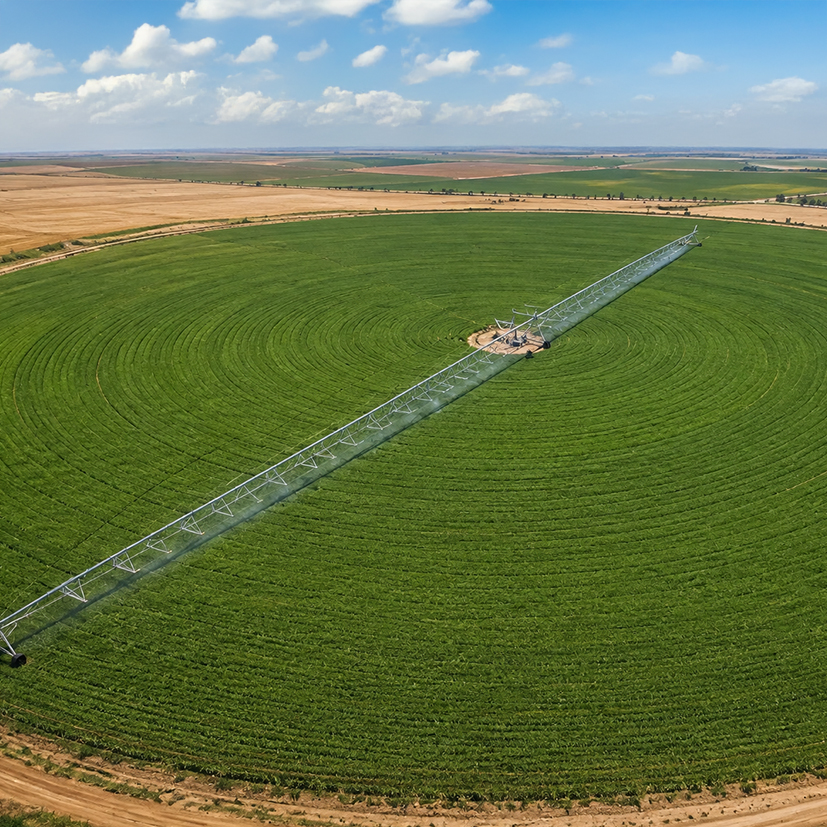
A dual-mode machine is only worth having if the layout is drawn for it. Our engineering team takes the outline of the parcel, its slope, the crop and the yield of the water source, then sets out which part of the field is watered in which mode, where the pivot centre sits and where the travel line runs.
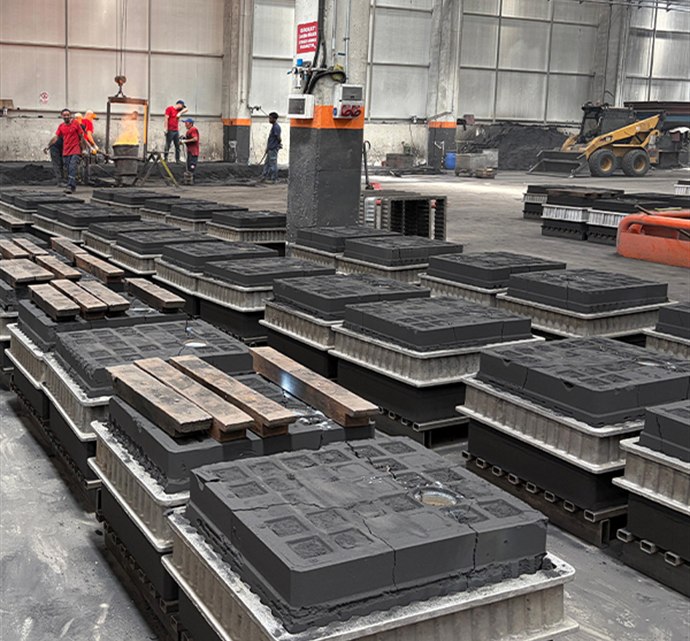
The same span, the same drive and the same control panel as our centre pivots and linears — which is why one spares inventory covers a machine that does two jobs.
A reinforced base, water connection and power for the machine to rotate about.
See the partThe straight run the machine follows in linear mode, and the guidance that keeps it on it.
See the partThe same UMC drive as every other machine we build, so the spares match across the fleet.
See the partSized against the whole parcel rather than the reach of one mode.
See the partA nozzle chart that holds the same application depth whichever way the machine is moving.
See the partProgrammable cycles and fault alarms, set for the mode the machine is running.
See the partNo machine suits every parcel. This is where this one does and does not fit — the other two are compared below.
All three are built on the same galvanized spans, the same tower drive and the same control panel. The choice is about the shape of the land, not about the machine you are tied to afterwards.
It can work in two modes. Connected to a prepared centre it rotates like a centre pivot; set on its travel line it moves in a straight run like a linear machine. One machine covers both, instead of one machine per shape of ground.
A multi-center machine has one mode — rotation — and is towed between several prepared centres. A universal machine has two modes on one parcel: it rotates about a centre and it travels in a line.
No. The sprinklers are graded along the span so the same depth is applied whichever way the machine is moving. The nozzle chart is drawn for both modes at once.
Not as an afterthought. The layout, the span count and the guidance are drawn for dual-mode running before the machine is built, which is why the field plan comes first.